YATTLL Mobility Products Manufacturer Email: info@yattll.com

You can walk around your home and manage short trips, but a full day of shopping or sightseeing feels difficult. Can you use a mobility scooter even if you do not consider yourself disabled?
You may be able to use a mobility scooter without having a permanent disability. However, your eligibility depends on your mobility needs and the rules where you intend to use it. Having difficulty walking, holding formal disability documentation, and qualifying for insurance coverage are separate matters.
Understanding these differences can help you decide whether a scooter suits your situation and what to check before choosing one.
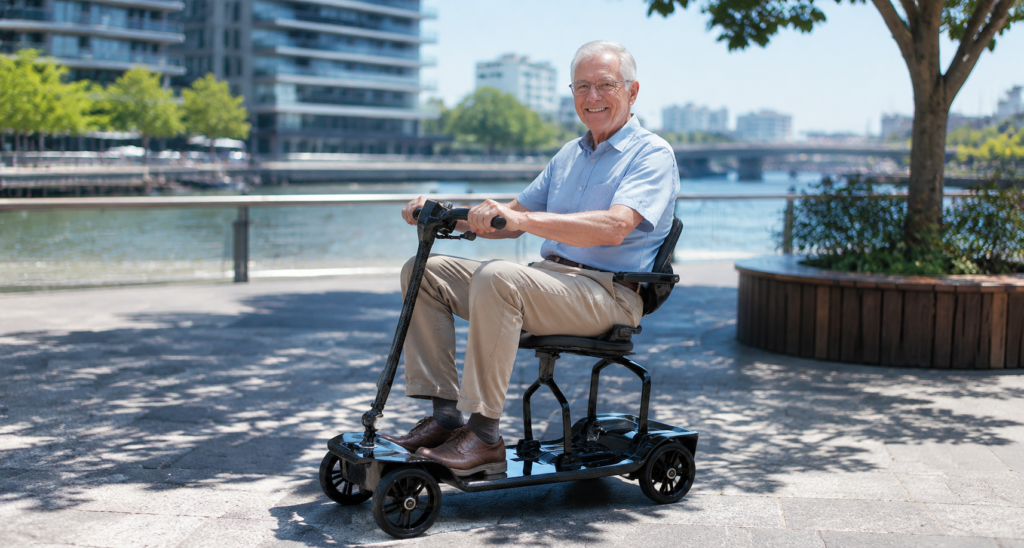
Do You Have to Be Unable to Walk to Use a Mobility Scooter?
No. Being able to walk short distances does not necessarily mean you can comfortably manage every journey.
Some people need assistance only for longer outings. Others experience walking difficulties that change from day to day or need temporary support while recovering from an injury.
For example, someone may walk independently from their front door to a car but struggle to get around a large shopping centre. Their ability to stand or take a few steps does not explain how much support they need throughout the day.
A mobility scooter may be worth considering when walking difficulties limit your activities. The decision should reflect your needs, your ability to operate the equipment, and the conditions in which you plan to use it.
What If You Have No Disability or Walking Difficulties?
There is a difference between not identifying as disabled and having no mobility limitations.
A person recovering from a leg injury may not consider themselves disabled, yet still experience substantial difficulty walking. Someone who simply wants a faster way around a shopping centre is in a different position.
Rules also vary by location:
- In the United States, ADA protections for mobility-device access apply to people with disabilities. Using a scooter purely for convenience does not automatically give someone those protections. State and local rules and venue policies may also apply.
- In the UK, official guidance limits use to people who have difficulty walking because of an injury, physical disability, or medical condition, with specific exceptions for activities such as repairs, demonstrations, manufacturer testing, and user training.
Buying or renting a scooter does not automatically give you permission to drive it everywhere. Check the requirements for your location and intended destination.
Do You Need a Prescription or Disability Certificate?
Documentation requirements depend on where you live, how you obtain the scooter, and whether you apply for financial assistance.
Purchasing equipment privately, renting it, and requesting insurance coverage involve different processes. Ask the supplier which requirements apply to your situation.
For example, U.S. Medicare coverage requires medical necessity, a face-to-face examination, and a written prescription from a treating provider, along with other eligibility conditions. Wanting a scooter for longer outdoor trips alone does not establish eligibility.
A prescription required for funding should not be confused with a universal requirement for every scooter user.
How Can You Tell Whether a Mobility Scooter Is Suitable?
Start with the activities you find difficult and the support you need to complete them.
Consider these questions:
- How far can you comfortably walk during a typical outing?
- Can you safely get on and off the scooter?
- Can you maintain a stable seated position?
- Can you comfortably reach and operate the steering controls?
- Where will you store and charge it?
- Will you need someone to help transport it?
If you are recovering from surgery or an injury, discuss scooter use with your treating clinician. Transfers, seating position, and movement restrictions can affect whether it is appropriate.
A practical demonstration can help you compare a scooter with other options, including power wheelchairs if a different control or seating arrangement is needed.
Choosing a Mobility Scooter for Your Everyday Routine
Once you understand your needs and local requirements, compare equipment against the journeys you actually make. YATTLL’s mobility scooter range provides a starting point for reviewing available models with a supplier.
| Feature | What to check |
|---|---|
| Seating and controls | Whether you can sit comfortably and operate the controls during a practical trial |
| Weight capacity | Whether the specified capacity accommodates the intended load |
| Transport weight | Whether you or a helper can safely lift the required components |
| Folded dimensions | Whether the scooter fits your vehicle and storage space |
| Turning space | Whether it can navigate the entrances and corners you regularly encounter |
| Route suitability | Whether your surfaces and gradients are within the manufacturer’s operating limits |
| Battery range | Whether the expected range suits your journeys, allowing for changing conditions |
| Service support | Availability of maintenance, replacement parts, and warranty assistance |
Avoid choosing on a single specification. A low weight may help with transport, but seating comfort, control access, and suitability for your route also matter.
Considering a Folding Mobility Scooter
If your routine includes car journeys or limited storage space, a folding model may be worth exploring.
The YATTLL YECZ2 carbon fibre folding mobility scooter is one option to discuss with your supplier. You can also review the YATTLL YECZ4A carbon fibre mobility scooter when comparing available designs.
Before selecting either model, request the current specifications and confirm:
- Whether the listed weight includes the battery.
- How the folding mechanism operates.
- Whether the folded dimensions fit your intended storage space.
- What surfaces and gradients the model supports.
- What servicing and parts support are available in your region.
For air travel or public transport, confirm acceptance directly with the operator before booking. A folding design alone does not establish transport approval.
Support for Mobility Retailers and Distributors
Customers may ask whether they are “disabled enough” to use a scooter when their real concern is difficulty completing everyday journeys.
Retailers can make that conversation more useful by discussing walking limitations, intended routes, equipment handling, and local requirements. A demonstration also helps customers understand whether a particular model fits their needs.
YATTLL supplies mobility scooters to distributors, medical equipment suppliers, and mobility businesses, with wholesale and OEM/ODM options available. Businesses can use the enquiry form on the YATTLL mobility scooter page to request product information and discuss supply requirements.
You do not have to wait until walking becomes impossible to explore mobility support. Choose based on your actual needs, the applicable rules, and a practical assessment of the equipment you intend to use.